20050822

Doing well difficult things
I'm glad to report that thanks to the sheer idiocy of google, this is now the top hit for "Doing difficult things well", significantly beating Data Connection and their wiley slogans. Incidentally, DC are currently on a hiring binge, so if you can stomach the prospect then now would be the time to submit yourself to their hilarious psychometric profiling and testing.
However, this seems to have dropped off the radar for "webartoffer", the dodgy outfit that apparently tried to nick money from me. On the plus side, their website does appear to be kaput, which I'd like to think is in someway due to my inactions.
So meantime, here's a new web-related hijink to relate. I operate a private internet domain which, let's say, is called www.anchor.org. This has the nice feature that any mail to x@anchor.org gets to me, where x can be any arbitrary string. Hence, I have got in the habit of giving out custom made addresses to different people. Amazon get to email me at amazon@anchor.org, other people get jerseyelectric@anchor.org, dirtydvds@anchor.org etc. I recently started getting spam sent to my address, but the headers revealed that the mailing address was actually mybank@anchor.org. Where, of course, mybank is my bank. This irritated me: how had my bank allowed my address to leak out?
The point being, that this address has been given out to noone else, appears on no webpage (including this one), and has no other purpose. And although I receive spam to non-existent addresses like "admin@anchor.org" or "info@anchor.org", mybank is sufficiently non-standard that it seems very highly unlikely that anyone would have guessed it, given that I've never received spam addressed to "someotherbank@anchor.org".
So I contacted mybank about this, and asked them what was going on. And they replied... that they didn't know. They claimed that they'd never passed on personal details, etc. etc., and so... well, what can you do? I didn't give out the email address. And the bank claim they didn't. So that leaves... some hacker snooping on the email sent from my bank to me. Which seems a bit extreme, you wouldn't have thought that they would need to go to that much effort.
So I throw it open to you: anyone got any better ideas how my clean address could have fallen into the hands of the evil spammers? The point being, I don't really care all that much about it: if it gets out of hand, then I'll procmail all email to that address to /dev/null, and configure a new one for mybank (and see how long before that starts receiving spam). I'm just curious how, for what should have been
a closed system, somehow this fell into the hands of the spammers while expedia@anchor.org, computerstore@anchor.org, or cheapthaibrides@anchor.org have all remained spam-free so far.
However, this seems to have dropped off the radar for "webartoffer", the dodgy outfit that apparently tried to nick money from me. On the plus side, their website does appear to be kaput, which I'd like to think is in someway due to my inactions.
So meantime, here's a new web-related hijink to relate. I operate a private internet domain which, let's say, is called www.anchor.org. This has the nice feature that any mail to x@anchor.org gets to me, where x can be any arbitrary string. Hence, I have got in the habit of giving out custom made addresses to different people. Amazon get to email me at amazon@anchor.org, other people get jerseyelectric@anchor.org, dirtydvds@anchor.org etc. I recently started getting spam sent to my address, but the headers revealed that the mailing address was actually mybank@anchor.org. Where, of course, mybank is my bank. This irritated me: how had my bank allowed my address to leak out?
The point being, that this address has been given out to noone else, appears on no webpage (including this one), and has no other purpose. And although I receive spam to non-existent addresses like "admin@anchor.org" or "info@anchor.org", mybank is sufficiently non-standard that it seems very highly unlikely that anyone would have guessed it, given that I've never received spam addressed to "someotherbank@anchor.org".
So I contacted mybank about this, and asked them what was going on. And they replied... that they didn't know. They claimed that they'd never passed on personal details, etc. etc., and so... well, what can you do? I didn't give out the email address. And the bank claim they didn't. So that leaves... some hacker snooping on the email sent from my bank to me. Which seems a bit extreme, you wouldn't have thought that they would need to go to that much effort.
So I throw it open to you: anyone got any better ideas how my clean address could have fallen into the hands of the evil spammers? The point being, I don't really care all that much about it: if it gets out of hand, then I'll procmail all email to that address to /dev/null, and configure a new one for mybank (and see how long before that starts receiving spam). I'm just curious how, for what should have been
a closed system, somehow this fell into the hands of the spammers while expedia@anchor.org, computerstore@anchor.org, or cheapthaibrides@anchor.org have all remained spam-free so far.
20050821
Four to the Floor
I recently read The Rule of Four. It's one of those hidden treasure / secret clues / coming-of-age / princeton university / romance / steam tunnels / conspiracy theory novels that we're seeing so many of recently. The plot revolves around a cryptic (and allegedly real though I am just too lazy to check) book from the 15th century. The narrator is engaged in decoding the clues in the book, finishing his finals, and realizing that maybe he should pay more attention to his girlfriend.
It's an entertaining, if quite often infuriating, novel. The decoding of the clues is mixed in with filling in of background details in the narrator's life, leaving a somewhat confused timeline. It doesn't help that much of the action takes place in an insanely frenetic 24 hour period the description of which spans most of the book.
I find the reader reviews on Amazon quite amusing. Many of the recent reviews attack the book for its flaws quite vituperatively. Critically, it was reasonably well received, but one of the mistakes the reviewers made was in their laziness, the plot meant that they described it as a cross between "The Da Vinci Code" and Umberto Eco. Well, Eco-fans are unlikely to find enough in here to catch their attention. It's certainly superior to the breathless hyperbole of the DVC, and a little more considered. But because of the quotes on the front cover, lots of DVC fans have piled in, expecting another trashy romp around well-trodden conspiracy theories and carefully planned misdirection. They then whinge that this book has been written by people who know how to string a sentence together, and has plot elements such as romance and thought. They complain that the book lectures them, conveniently forgetting that at several points in the Da Vinci Code, the lead character has flashbacks to times when he was explaining the relevant material *in a lecture*.
Not that I particularly want to defend the Rule of Four. It has plot holes aplenty, and the solution of the riddles are riddled with holes. While DVC resorted to getting William Tunstell-Pedoe to make up some silly anagrams, tRoF has arcance references to classical literature. Each riddle is solved (with immense effort, sleepless nights, thousands of hours of research etc.) by a single word, which is then used as a key to decipher a block of otherwise innocuous seeming text in the book being unravelled. How does this deciphering work? Well, one clue is answered by something like stadium, which is seven letters long, so you have to take every seventh letter of the text starting from a point where "stadium" actually appears in the text. Or another one is answered by a four letter word, so they take the first letter of every fourth word, and so on.
Can you see the flaw here? Once you know the general pattern of the clues, you don't actually have to solve them. You just have to try various trivial options (every third letter, every sixth letter etc.), which would take no time at all given the electronic version of the text a few perl scripts. Funnily enough, none of the Amazon reviewers seem to have noticed this. Unless I've made some glaring error, in which case, I don't care.
Furthermore, the titular "rule of four" is actually learned based on information from outside the book (contrary to the deciphered text's claim that an appropriately educated reader should be able to work it out for himself), and other vital blueprints are also picked up from outside the work itself.
One thing I did like about the book, although it may be unintentional, is the time compression: the bulk of the book, about 500 pages in all covers a couple of days in great detail, and refers back to events happening over the course of the narrator's time as an undergraduate. But, the five years after graduation get covered in a couple of paragraphs. This initially seems somewhat slipshod, especially since the narrator's crucial decision that a wild goose chase after some non-existent buried treasure wasn't worth the toll on his personal life and friendships seems then to be ignored since he goes to work in Texas for a software company as some kind of antisocial hermit. But, the more I think of it, the more clearly it becomes a metaphor: you graduate university, and after that years seem to slip by so quickly in comparison to the time you spend as a student, which seems so rich and full of detail. In other words, this book is like life: fun when you are young and without responsibilities, but after that it can get dull and tiresome.
Anyway, in order to recapture some fun and games, I'm about to embark on my own quest: to find out the truth behind the tragic death of Jamie Kane. Feel free to join me (for whatever the rights and wrongs, this piece of Wiki-fiddling did catch my attention and draw me in to the teen-oriented world). I'll let you know how I get on.
It's an entertaining, if quite often infuriating, novel. The decoding of the clues is mixed in with filling in of background details in the narrator's life, leaving a somewhat confused timeline. It doesn't help that much of the action takes place in an insanely frenetic 24 hour period the description of which spans most of the book.
I find the reader reviews on Amazon quite amusing. Many of the recent reviews attack the book for its flaws quite vituperatively. Critically, it was reasonably well received, but one of the mistakes the reviewers made was in their laziness, the plot meant that they described it as a cross between "The Da Vinci Code" and Umberto Eco. Well, Eco-fans are unlikely to find enough in here to catch their attention. It's certainly superior to the breathless hyperbole of the DVC, and a little more considered. But because of the quotes on the front cover, lots of DVC fans have piled in, expecting another trashy romp around well-trodden conspiracy theories and carefully planned misdirection. They then whinge that this book has been written by people who know how to string a sentence together, and has plot elements such as romance and thought. They complain that the book lectures them, conveniently forgetting that at several points in the Da Vinci Code, the lead character has flashbacks to times when he was explaining the relevant material *in a lecture*.
Not that I particularly want to defend the Rule of Four. It has plot holes aplenty, and the solution of the riddles are riddled with holes. While DVC resorted to getting William Tunstell-Pedoe to make up some silly anagrams, tRoF has arcance references to classical literature. Each riddle is solved (with immense effort, sleepless nights, thousands of hours of research etc.) by a single word, which is then used as a key to decipher a block of otherwise innocuous seeming text in the book being unravelled. How does this deciphering work? Well, one clue is answered by something like stadium, which is seven letters long, so you have to take every seventh letter of the text starting from a point where "stadium" actually appears in the text. Or another one is answered by a four letter word, so they take the first letter of every fourth word, and so on.
Can you see the flaw here? Once you know the general pattern of the clues, you don't actually have to solve them. You just have to try various trivial options (every third letter, every sixth letter etc.), which would take no time at all given the electronic version of the text a few perl scripts. Funnily enough, none of the Amazon reviewers seem to have noticed this. Unless I've made some glaring error, in which case, I don't care.
Furthermore, the titular "rule of four" is actually learned based on information from outside the book (contrary to the deciphered text's claim that an appropriately educated reader should be able to work it out for himself), and other vital blueprints are also picked up from outside the work itself.
One thing I did like about the book, although it may be unintentional, is the time compression: the bulk of the book, about 500 pages in all covers a couple of days in great detail, and refers back to events happening over the course of the narrator's time as an undergraduate. But, the five years after graduation get covered in a couple of paragraphs. This initially seems somewhat slipshod, especially since the narrator's crucial decision that a wild goose chase after some non-existent buried treasure wasn't worth the toll on his personal life and friendships seems then to be ignored since he goes to work in Texas for a software company as some kind of antisocial hermit. But, the more I think of it, the more clearly it becomes a metaphor: you graduate university, and after that years seem to slip by so quickly in comparison to the time you spend as a student, which seems so rich and full of detail. In other words, this book is like life: fun when you are young and without responsibilities, but after that it can get dull and tiresome.
Anyway, in order to recapture some fun and games, I'm about to embark on my own quest: to find out the truth behind the tragic death of Jamie Kane. Feel free to join me (for whatever the rights and wrongs, this piece of Wiki-fiddling did catch my attention and draw me in to the teen-oriented world). I'll let you know how I get on.
20050819
20050812
And In Local News...
Very odd local news story... President of the local school board is forced to resign after plagiarizing a graduation address.
Before
After
How peculiar.
Before
After
How peculiar.
20050811
Learning to count with the indie rockers
In the course of a lengthy discussion with msw, we somehow got onto the topic of counting with band names. Sadly, I seemed to be struggling a bit with this, so I'll put down what I have, and leave you to fill in some more in the comments.
KRS-1
U2
Oui3
The Fab Four (sorry, there should be something better for this) Four non-blondes (thanks commenter)
Jurassic5
Nikki Sixx
L7
OP8
MC 9 Hundred Foot Jesus (this is cheating, I can't remember a proper one for nine)
Ten Benson
Your challenge: get from Ten Benson to Matchbox 20. And improve the ones I have here. Is it possible to get up to 100 without going too obscure? Presumably 10,000 Maniacs is unreachable, but maybe Blink 182 is within reach?
KRS-1
U2
Oui3
Jurassic5
Nikki Sixx
L7
OP8
MC 9 Hundred Foot Jesus (this is cheating, I can't remember a proper one for nine)
Ten Benson
Your challenge: get from Ten Benson to Matchbox 20. And improve the ones I have here. Is it possible to get up to 100 without going too obscure? Presumably 10,000 Maniacs is unreachable, but maybe Blink 182 is within reach?
20050802
Atrocious but obscure pun
One only for the mathematicians and theoretical computer scientists, I'm afraid.
What's this:

(Hint: it's not a dead bear chart)
What's this:
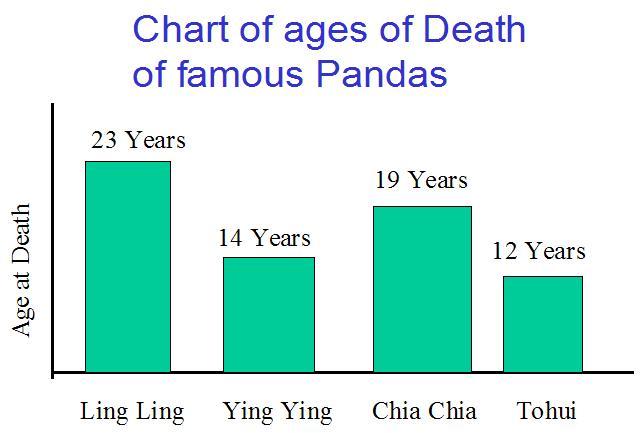
(Hint: it's not a dead bear chart)
Manservant
Today I have mostly been listening to Manservant's debut single, "No Means Yes". A three minute slice of power pop that gets more disturbing with every listen, it slams down a line of postmodern feminism in the guise of guilty complicity. Pulling Sleeper and Echobelly into the 21st century, the sound has echoes the wantonly obscure Switchblade Kittens' Ode To Harry Potter. Thematically, there are echos of Atilla The Stockbroker's Contributory Negligence.
Manservant does not, as far as I know, have a record deal, or even a record: this recording came to me care of a friend of a friend of the band. So if you want to hear it, then you'll have to find your own way. But it is the best thing ever, today.
Take me out, get me drunk, take me back to your house, it's not hard
And it shouldn't be too hard for you to fill in the rest
'Cos No means Yes
Manservant does not, as far as I know, have a record deal, or even a record: this recording came to me care of a friend of a friend of the band. So if you want to hear it, then you'll have to find your own way. But it is the best thing ever, today.
20050801
Champagne Anarchists
I went to paris and back last Thursday. In retrospect, I should have noticed that this was insane before I went, but I closed my eyes and tried to ignore it. I took the EuroTrain, which was quite good, hugely expensive since it was a last minute booking, and tolerably fast. The return journey however was marred by the presence of a group of irritating shouters who insisted on having a loud and sweary conversation for two hours until someone else in the carriage couldn't stand it any longer and tried to start a fight with them. My natural defenses had been put up long before, when I heard one of them say, "The champagne is only twenty five quid, let's get a couple of bottles". I immediately put in my headphones up to full volume and tried to drown out their blaring idiocies with the Kleptones, with some success.
Paris was nice though. Don't go for a day trip though, that's clearly insane.
Paris was nice though. Don't go for a day trip though, that's clearly insane.
20050722
Boom bang a bang
Can't help feeling that this is all going to end in widescale persecution of people who use rucksacks.
20050712
What's wrong with this picture?
Take a look at the picture on this page:

Can you spot the problem?
[edit: no, it's not the dodgy photoshopping on the cutout edges.]
Am about to finishing packing, with 1 hour to spare before heading out the front door and off to the airport... which is nice. Then I can finally relax. See you in europe, mes amis.
Can you spot the problem?
[edit: no, it's not the dodgy photoshopping on the cutout edges.]
Am about to finishing packing, with 1 hour to spare before heading out the front door and off to the airport... which is nice. Then I can finally relax. See you in europe, mes amis.
20050710
Can't get out of bed
I used to sleep as long as I felt like, by not setting the alarm clock and just seeing when I would wake up. This was reasonably effective, but eventually I got the impression that my body was taking advantage of this arrangement, and taking more sleep without replenishing my energy levels the amount it should. Then I saw one of these new "blog" [it's short for 'logarithm to the base b'] things which had a helpful title, How to become an early riser.
Here is a summary of what the article suggests: use an alarm clock.
This is quite effective, but I have found a convenient modification that makes it work even better. I have an alarm clock radio, which I used to have tuned to the NPR station, so I would be woken with a briefing of world events. This was usually so interesting, or alternatively, so boring, that I would end up snoozing away for some time longer. Then one day, when the signal was fading, I tried to retune the radio and lost the station entirely (damn public broadcasting and their weedy transmitters!). Instead, I stumbled upon my local "family radio" station, broadcasting 'good news' 24 hours a day. Now, it turns out that the time I want to get up (8am -- let's not let this get out of control) coincides exactly with a two minute program called "Creation moments". This little daily capsule of information gives reason after reason why all those scientists are being so silly, and that basic observable facts point indubitably to the conclusion that God created the heavens and the earth, and no evolution has happened at all, ever. Thus, god exists. QED. It's great. Everyday after listening to it, I jump out of bed, energized by the rhetoric, ready to face the day. For some reason most of the 'moments' seem to be about whales, but that doesn't seem to matter much. You'd think that having being doing this for years, the CM folks would be running out of unarguable proofs of god's existence, but you'd be wrong: go to the website and you'll see archives of hundreds and hundreds of examples of how all science is wrong and scientists are blinkered, cowlish fools. Praise the Lord!
Here is a summary of what the article suggests: use an alarm clock.
This is quite effective, but I have found a convenient modification that makes it work even better. I have an alarm clock radio, which I used to have tuned to the NPR station, so I would be woken with a briefing of world events. This was usually so interesting, or alternatively, so boring, that I would end up snoozing away for some time longer. Then one day, when the signal was fading, I tried to retune the radio and lost the station entirely (damn public broadcasting and their weedy transmitters!). Instead, I stumbled upon my local "family radio" station, broadcasting 'good news' 24 hours a day. Now, it turns out that the time I want to get up (8am -- let's not let this get out of control) coincides exactly with a two minute program called "Creation moments". This little daily capsule of information gives reason after reason why all those scientists are being so silly, and that basic observable facts point indubitably to the conclusion that God created the heavens and the earth, and no evolution has happened at all, ever. Thus, god exists. QED. It's great. Everyday after listening to it, I jump out of bed, energized by the rhetoric, ready to face the day. For some reason most of the 'moments' seem to be about whales, but that doesn't seem to matter much. You'd think that having being doing this for years, the CM folks would be running out of unarguable proofs of god's existence, but you'd be wrong: go to the website and you'll see archives of hundreds and hundreds of examples of how all science is wrong and scientists are blinkered, cowlish fools. Praise the Lord!
20050709
London Calling
In an attempt to understand what's been going on in the world lately, I've be relistening to Radio 1's broadcast output from 9am to noon on Thursday. Thanks to the BBC's policy of sticking pretty much everything that is broadcast on the website, you can listen as the news slowly filters through, from "electrical disruptions" being second billing to the G8 summit at 9.30 am, to launching into full blown emergency broadcast system mode around 11am. Even when things seem bad, they still stick with the jokes and entertainment news until the Tony Blair press conference when it becomes clear that something is up. Contrary to popular belief, sometimes news travels quite slowly.
As I was beginning to pack for my European Vacation (starting Wednesday) I got out my bag of European stuff: credit cards, Euros, power converters etc. Amongst it all I found my honorary Londoner card:

which made me remember I'm awomble londoner of sorts. Anyway, I'll be arriving in London wednesday morning, but unless anyone is up for coffee in Victoria at some unearthly hour in the morning (probably about 9.15 am), then your best bet to meet up in the capital will be on Friday when I am planning a day trip in to the city. Contact me if you are around. And you know who I am, natch.
As I was beginning to pack for my European Vacation (starting Wednesday) I got out my bag of European stuff: credit cards, Euros, power converters etc. Amongst it all I found my honorary Londoner card:
which made me remember I'm a
20050708
20050705
By the way, which one's Pink?
Nice to see that Westlife is still going strong after eight long years, and that their celebratory concert, Westlife8 got such a good set of support acts. Even old Punk Floyd was on there, doing some of their greatest hits. But it was a shame that they had to try to establish their youth credentials by throwing in a cover version of 'Comfortably Numb' by the scissor sisters. Their slowed down, de-synthesized version managed to drain all the life out of this disco classic, and turn it into something more like a funeral dirge. They should stick to their own material.
Subscribe to:
Posts (Atom)